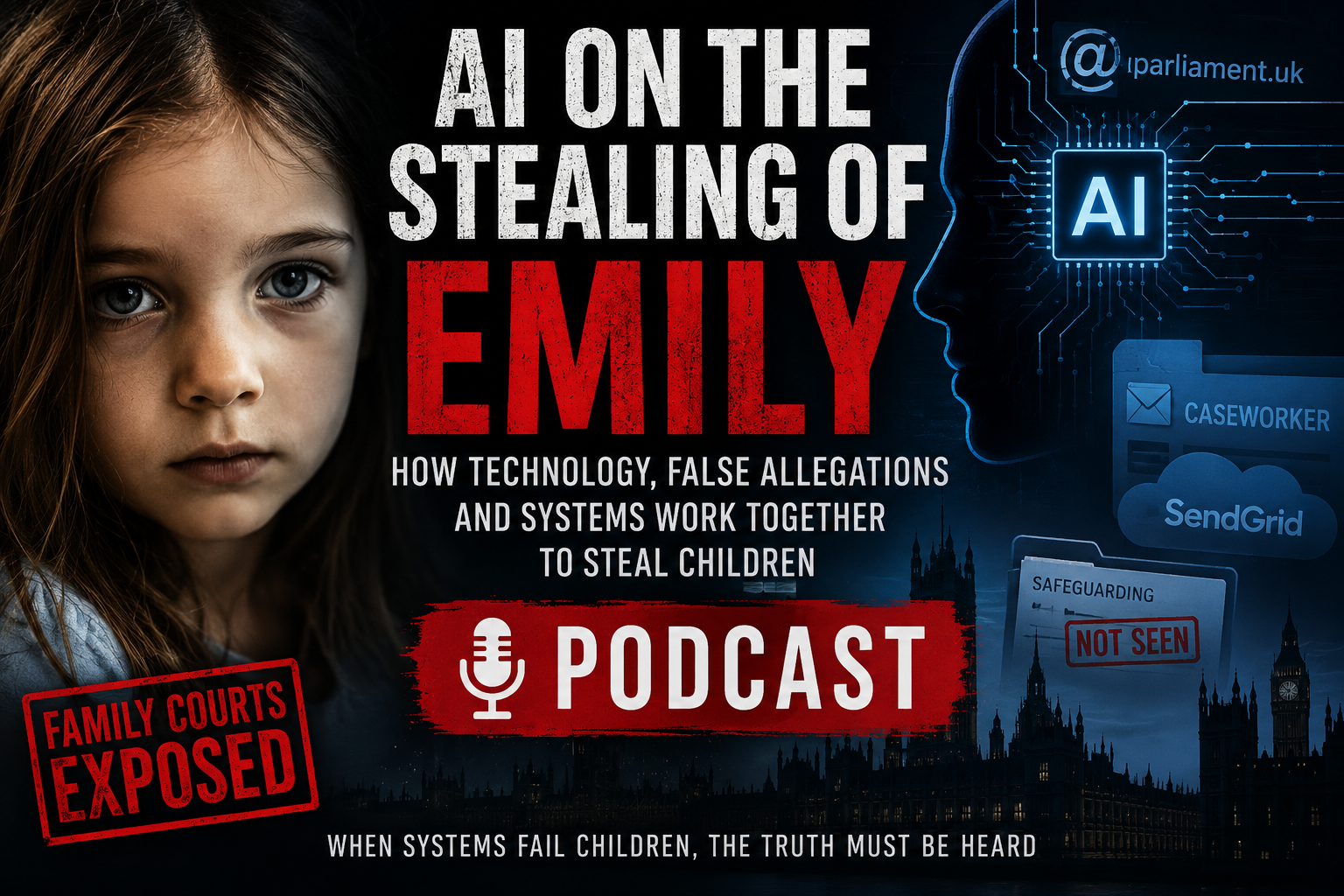
Pip: If you have ever emailed your MP and wondered what actually happens next, Martin Newbold has been pulling that thread — and the answer involves casework software, AI pilots, and a parliamentary hearing that may have said more than anyone intended.
Mara: This episode covers the infrastructure behind how MP correspondence gets processed, what the evidence does and does not prove, and where the safeguarding implications land. Let’s start with the casework software itself.
Parliament, Caseworker Software, and What the Evidence Actually Proves
Pip: The central question here is whether Parliament runs one shared, centrally-procured casework system processing constituent mail — and what it means for safeguarding if everything flows in automatically before a human ever sees it.
Mara: The transcript from a parliamentary hearing is the anchor. Helena Dollimore asked IPSA whether it had ever sought access to casework data, and the phrasing matters: “the back-end data from the Caseworker software, which most offices use and has clear numbers.”
Pip: That singular phrasing — “the” back-end data, “the” Caseworker software — points toward one shared system, not hundreds of independent office subscriptions. The architecture, the G-Cloud pricing at sixty-five pounds per user per year, and the aggregate data access all point the same direction.
Mara: IPSA’s CEO Karen Walker confirmed they had approached that data, but added: “We have been advised by one of the teams in the House that some of the data collected in Caseworker is not as accurate as it could be, because people use it in different ways.”
Pip: So the system Parliament apparently relies on for constituent records has already been flagged internally as unreliable. That is a problem on its own, but the safeguarding dimension is where it sharpens considerably.
Mara: Right. The post draws a clear distinction: if everything routes automatically into Caseworker before any human reviews it, the MP never makes the first safeguarding judgement — whether this is a child at risk, whether it needs an immediate referral, what level of protection this specific person requires. The system becomes the gatekeeper.
Pip: And a gatekeeper that, by IPSA’s own account, misfiled things and was used inconsistently. Parliament’s own records show a child-moved-abroad code exists — that post documents it directly — which sits uncomfortably alongside a casework pipeline that may be categorising sensitive correspondence before anyone qualified has read it.
Mara: On the AI side, the post is careful about what is proven. A Copilot pilot did run — an inbox management agent designed to categorise emails and forward casework automatically. The ASGP report from April 2026 confirms it was never deployed live due to cost and complexity, and is being rebuilt in Power Automate instead.
Pip: A prototype that failed and got quietly handed to a different tool. The post’s own summary is worth quoting directly: “Parliament piloted a Copilot agent to forward incoming casework emails to Caseworker. The pilot was not deployed and is being rebuilt in Power Automate. Whether Parliament has procured CaseworkerGov and whether any live integration exists is not publicly documented.” That is the honest line — and it matters that it is drawn there.
Mara: The post also distinguishes what is proven for this specific case: incoming mail to Exchange Online is confirmed, outgoing replies routing through CaseworkerMP and SendGrid is confirmed for some responses, and Helena Dollimore’s “most offices use” is a statement made in a hearing, not independent verification of universal adoption.
Pip: The gap between “stated in parliamentary evidence” and “independently proven” is doing a lot of work in this analysis — and the post is rigorous about keeping those categories separate, which, given the subject matter, is exactly the right instinct.
Mara: The safeguarding argument rests on that gap. Government guidance states safeguarding children is everyone’s responsibility. If the correspondence record shows safeguarding concerns processed as routine casework, with no referral, no named officer, and no protective action documented, the question is whether an administrative pipeline is substituting for a safeguarding function.
Pip: The infrastructure question and the safeguarding question are not separate issues — the architecture determines whether the human judgement happens at all.
Mara: And the evidence base here is careful to say what it proves and what it does not. That distinction is where the next questions have to start.
- The Effrontery of people who support crime with children?
- House of Lords Inquiry into Children’s Social Care — Time Is Running Out to Submit Evidence
- Re: East Sussex County Council Children’s Services – Emily Newbold
- Podcast Episode: Power, Abuse, And AI Oversight
- Why is Sir Tony Blair Hiding public meetings and data?



Leave a Reply