
Pip: Thestealingofemily.co.uk is a site where the documents are the argument, the questions are nineteen years old, and the answers are still outstanding — which, as opening pitches go, is hard to beat.
Mara: Martin Newbold has been publishing across three connected territories this week: political secrecy around Blair and Epstein, AI tools now operating inside children’s social care, and the institutional and legal failures at the heart of Emily’s case itself.
Pip: Let’s start with the political secrecy thread — Blair, Epstein, and what a 2002 Mandelson email tells us.
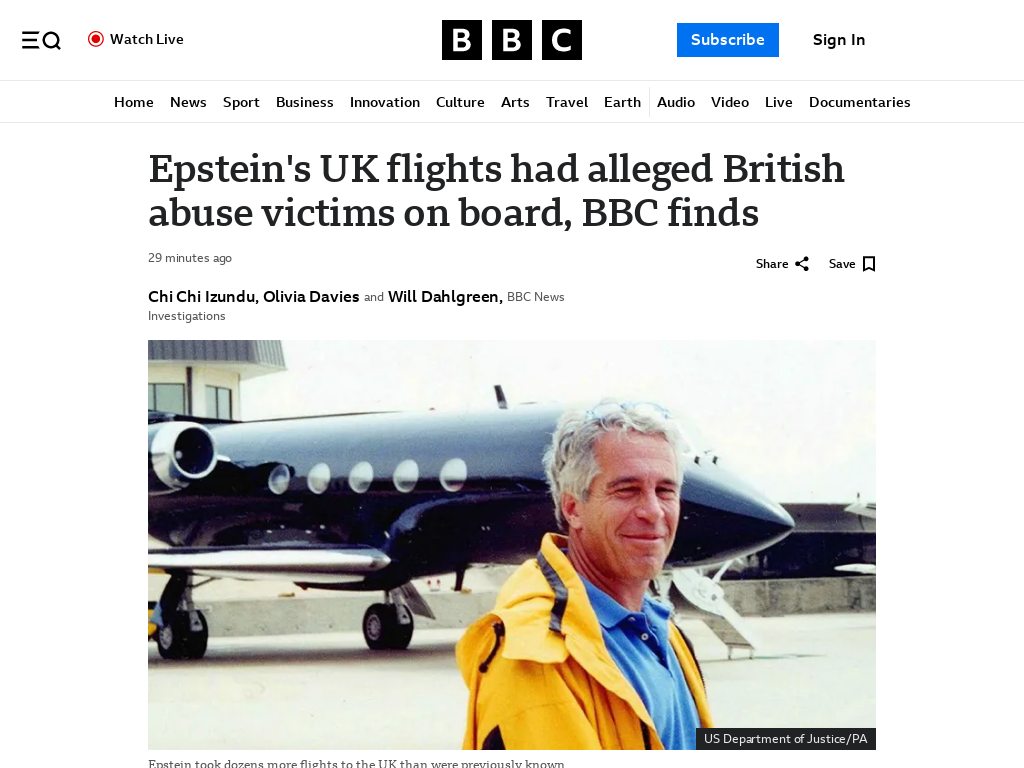
Blair, Epstein, And The Paper Trail Behind Closed Doors
Mara: The question this segment turns on is what the documentary record actually establishes about the network of connections between Blair’s government and Jeffrey Epstein — and what remains genuinely unresolved.
Pip: The anchor is a government document, page sixteen of V1_FINAL.pdf — a Mandelson email to Jonathan Powell dated 7 May 2002. Mandelson writes: “Do you remember when Clinton saw TB he said he wanted to introduce his travelling friend, Jeffrey Epstein, to TB?”
Mara: What this establishes in practice is a prior attempted introduction — before the documented 14 May 2002 Downing Street meeting. The exact date of Clinton’s original proposal remains unknown, but the sequence is now on the official record.
Pip: The Blair Education Agenda post builds a combined master timeline around that gap — mapping Dunkley’s Harkness Fellowship at Berkeley, Blair’s 1996 Washington visit, and the May 1997 New York meeting that the Clinton Library returned as one hit across five pages under FOIA 2025-1058-F.
Mara: The Why Is Sir Tony Blair Hiding Public Meetings and Data post then asks why 9,290 of approximately 12,402 processed pages in the Clinton Library’s Blair records are restricted in whole or in part. The library has supplied 393 pages of withdrawal and redaction schedules, but the specific five-page Dunkley-and-Blair record has not been identified within them.
Pip: And the Is Epstein Really Dead post adds a forensic thread: the autopsy describes an enlarged prostate, while LabCorp PSA reports from 2010 and 2018 include guidance referencing radical prostatectomy. The post is careful — that guidance is standard text, not proof of surgery — but if complete removal were verified, the autopsy description would require a medical explanation.
Mara: The Podcast With Anna and David ties the political and personal together directly: Churchtown Farm Field Studies Centre, where Starmer reportedly worked 1980 to 1982, sits inside the same historical period as the Westminster institutional failures documented by IICSA. The post is explicit that this is a timeline observation, not a proven connection.
Mara: The central question is who is responsible for ensuring serious safeguarding concerns receive a documented response — and that question runs directly into how AI is now shaping those records.
When the Case Notes Write Themselves
Mara: The question here is whether AI tools now operating inside children’s social care introduce new risks to the accuracy and challengeability of the records that feed into assessments and court proceedings.
Pip: The AI Warning post puts it plainly: “Does a parent know that a social worker is hitting a button on magic notes and this is becoming their assessment report?”
Mara: What that means in practice is that errors can enter statutory records before anyone checks them — and the AI Systems Used in UK Children’s Social Services post documents a September 2026 JUSTICE finding of exactly that: an AI-generated summary incorrectly recorded that someone had expressed suicidal thoughts, a statement the person had never made.
Pip: Somerset, St Helens, Tameside, North Yorkshire — four councils with published evidence of AI use in children’s social care, and a Department for Education that acknowledged in March 2026 it had limited information about where these tools were actually deployed.
Mara: East Sussex itself confirms using both Microsoft Copilot and Beam Notes in children’s social care — and confirms that temporary recordings are deleted after approved information is transferred. That is the evidence-preservation problem: if the original recording is gone, challenging an inaccurate AI-generated record becomes considerably harder.
Pip: From records that may not survive scrutiny, to the legal framework that governs what scrutiny is required in the first place.
The Section 47 Question That Has Not Been Answered
Mara: The tension running through the institutional abuse posts is statutory: what does Section 47 of the Children Act 1989 actually require before a child is removed, and was that requirement met in Emily’s case?
Pip: The East Sussex Section 47 Offences post quotes the Act directly: the local authority “shall make, or cause to be made, such enquiries as they consider necessary” to decide what safeguarding action should be taken. Shall — not may.
Mara: What this gets the reader is a precise question: if no assessment of Martin or of Emily in his care at his mother’s home was undertaken, what Section 47 enquiries did East Sussex actually perform before intervening?
Pip: There is a specific piece of positive evidence that sharpens this. He voluntarily completed a six-week Solihull parenting assessment through another local authority, passed it — and says the East Sussex social worker dismissed the result without a recorded reason.
Mara: The Truth They Don’t Want You to See frames the documentary failure at the foundation: Form C13, transmitted at 12:56 on 2 February 2010, states that “little is known about Mr Keenan or his family,” while Form C1, transmitted one minute earlier the same day, gives Keenan’s full name, address, and purported parental status.
Pip: Both documents cannot be accurate. The post asks who supplied the information, who checked it, and what evidence was relied upon — questions that have generated reference numbers across multiple continents without a substantive answer.
Mara: The Podcast Episode on Child Protection and Institutional Abuse documents the broader pattern: IICSA found no organised Westminster paedophile network, but did find individual perpetrators connected to Westminster and institutions that repeatedly put reputation ahead of child protection. The post is careful to separate what was established from what was alleged.
Pip: The Power, Abuse, and Secrecy podcast episode draws the threads together — the genogram submitted to court containing fundamental errors in Emily’s recorded family relationships, the Stirling attendance dates, the three dates in her court submission she could not later account for.
Mara: A genogram with wrong family relationships does not stay in a filing cabinet. It becomes part of the factual architecture for every decision that follows — which is exactly what the post says.
Pip: Nineteen years of reference numbers. The site’s question is whether the process followed the evidence, or ran ahead of it.
Mara: Political redactions, AI-generated records, falsified court documents — the common thread is accountability for what actually went into the files and why.
Pip: And whether any institution with the authority to answer has yet done so. Back next time with whatever the site publishes next — which, given the pace, will not be long.



Leave a Reply