
Decades of family separation have devastated relationships across generations, leaving children, parents and extended families without answers. Further accounts raise concerns about repeated institutional failures, disputed evidence and the treatment of children. Parliamentary decisions, safeguarding legislation and restricted historical records raise wider questions about transparency and accountability. At the heart of these investigations is the demand for truth, independent scrutiny and justice for those affected.
Pip: Welcome to thestealingofemily.co.uk — a site that does not let uncomfortable questions stay comfortable for long.
Mara: Martin Newbold’s recent posts move across three connected territories: families fractured by separation and what that costs across generations, the parliamentary record on child protection, and what public records about Tony Blair and the Clinton Library may or may not be hiding.
Pip: Let’s start with the families themselves — and the question of who actually accounts for the years lost.
Generations lost to family separation
Mara: The central question here is about scale and reach — not just what happens to one child, but what ripples outward across an entire family tree when separation goes on for years or decades.
Pip: The post on Four Families puts it plainly, and the framing is worth sitting with: “When a child is separated from their family, the consequences do not stop with the parents. They spread across generations.”
Mara: That is not rhetorical. The post documents Lauren Cunningham’s 26 years of estrangement, Emily’s 19 years, and the effect on siblings like Daniel and Paige Cunningham, who grew up without knowing their full sister and stepsister — which raises real questions about identity, family history, and relationships formed in the absence of people who should have been present.
Pip: Grandparents who never watched grandchildren grow up. Aunts, uncles, cousins — all of it compounds quietly, out of sight of any court record.
Mara: And the post notes that other families are now coming forward with their own accounts, supported by documents and firsthand testimony. The accountability question it closes on is direct: who takes responsibility for the years that cannot be returned?
Pip: That accountability question gets sharper when you look at what Parliament has actually done — or declined to do.
Parliament’s record on child protection
Mara: The post titled “The Effrontery of people who support crime with children?” centers on a single vote: 8 January 2025, an amendment calling for a national statutory inquiry into grooming gangs.
Pip: The Hansard division record is unambiguous on this — 111 Ayes, 364 Noes.
Mara: To be precise about what that vote was: the 364 MPs voted against the opposition amendment demanding the inquiry, not against the Children’s Wellbeing and Schools Bill itself. The post publishes the full list of names from that division and breaks down the party composition, with Labour MPs making up the substantial majority of the No votes.
Pip: Publishing the full list is a choice that says something about the intended audience — this is not a summary, it is a searchable record.
Mara: The post also directs readers to an MP correspondence archive, where safeguarding concerns raised with individual MPs, and their responses or non-responses, are documented. The invitation is explicit: read the evidence, decide for yourself. The House of Lords inquiry into children’s social care, and correspondence with East Sussex County Council Children’s Services regarding Emily Newbold, sit in the same territory — formal processes, formal records, and the question of what those processes have actually produced.
Pip: Which is also, it turns out, a question about what records exist and who controls access to them.
What the Blair records do and do not show
Pip: This segment is about a paper trail — specifically, what Freedom of Information requests and Clinton Library withdrawal schedules reveal about Tony Blair’s connections, and what they conspicuously withhold.
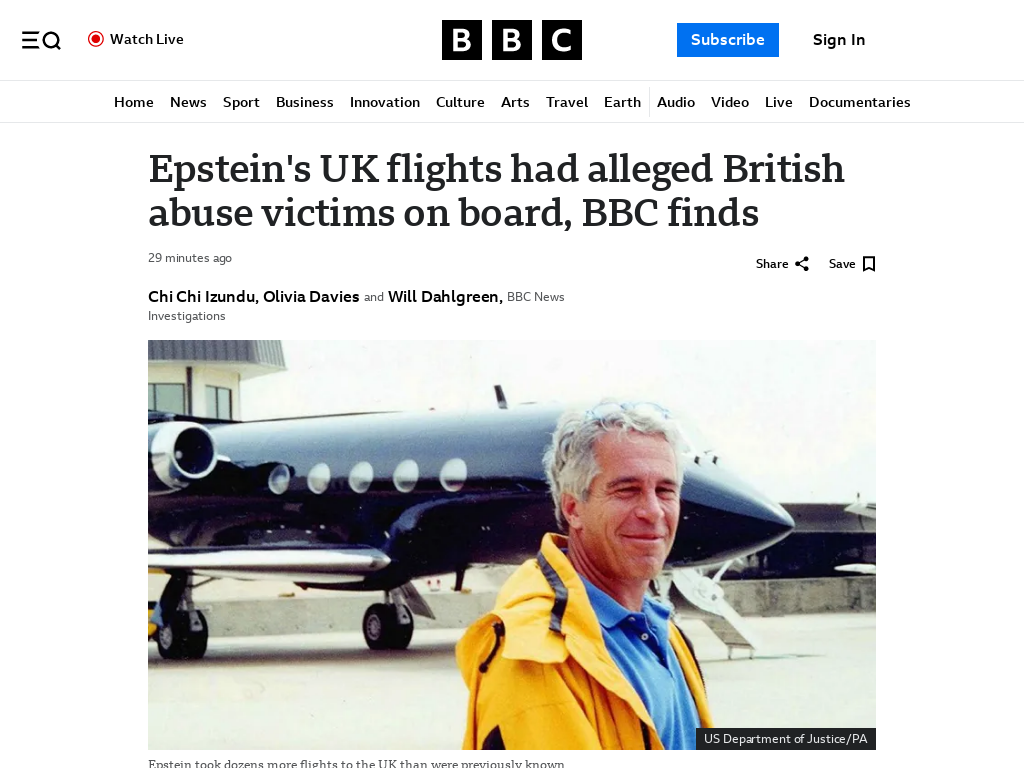
Mara: The post “Why is Sir Tony Blair Hiding public meetings and data?” opens with a documented timeline. On 7 May 2002, Peter Mandelson emailed Blair’s chief of staff Jonathan Powell recommending a meeting with Jeffrey Epstein, noting Bill Clinton had previously wanted to make the introduction. On 14 May 2002, Epstein was scheduled at 10 Downing Street at 5:00 pm. Blair’s spokesperson later said the meeting lasted under 30 minutes.
Pip: What the post is actually pursuing is a specific record — not a general inquiry about Blair, but a named document.
Mara: The FOIA request is precise: “Please identify the precise document, folder, page references and current disclosure status of the five-page record returned under ‘Dunkley and Blair’, reference CCG0000122359. Your 393-page withdrawal schedule contains no searchable reference to Dunkley.”
Pip: The Clinton Library has supplied 393 pages of withdrawal and redaction schedules. Of approximately 12,402 processed pages of Blair-related records, 9,290 were restricted in whole or in part. That is a significant proportion.
Mara: The restriction codes the post reproduces include national-security classified information, confidential presidential advice, personal privacy protections, and standard FOIA exemptions. What is absent is the specific Dunkley record, which is what the request is trying to locate.
Pip: The post also pulls in Jacqui Smith’s parliamentary record on the Safeguarding Vulnerable Groups Bill — her involvement confirmed by division records from 2006 — while carefully noting that Beverley Hughes held the formal ministerial role at Second Reading. The distinction matters if you are trying to establish who designed what.
Mara: The underlying question the post keeps returning to is why records about what was presented publicly as a social care reform agenda are restricted to this degree. That question does not resolve here — but the documentary foundation for asking it is laid out in detail.
Pip: Generations of separation, a parliamentary vote that is now on record, and documents that are mostly redacted — the thread running through all of it is accountability, and who gets to defer it.
Mara: The records exist. The question is whether the people responsible for answering them will.


Leave a Reply