
Martin Newbold
15 Valleyside Road
Ore Village
East Sussex TN355AD
[www.thestealingofemily.co.uk/news]
To: Minister Nesbitt Minister of Health
Department of Health
Castle Buildings
Stormont Estate
Belfast
BT4 3SQ
Email: Private.Office@health-ni.gov.uk
CC:
International Criminal Court
Oude Waalsdorperweg 10
2597 AK, The Hague
The Netherlands
Tel: +31 (0)70 515 8515
Fax: +31 (0)70 515 8555
2024-08-14
Dear Minister Nesbitt, DOH Private Office,
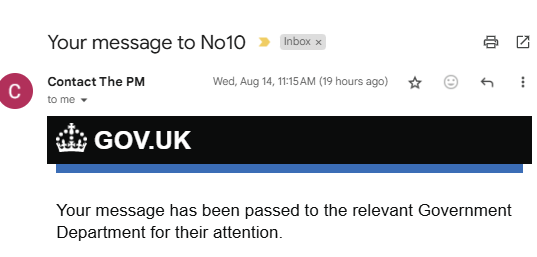
Thank you for acknowledging receipt of my email. I am alarmed that you have not provided me with a reference number to give to the International Criminal Court.
I am writing to formally lodge a claim against the Southern Health and Social Care Trust and related entities concerning their egregious mishandling of my daughter’s case. Given the grave nature of the allegations, I am demanding an international review by the International Criminal Court (ICC) due to substantial claims of negligence and misconduct in the case of Formal Claim of Negligence and Request for International Review and ‘Wrongful’ Separation.
Terms of Reference
For the purpose of addressing the claims and ensuring a thorough investigation, I propose the following Terms of Reference:
- Scope of Review: The investigation should cover the full timeline of my daughter’s case, including the initial care order, the relocation, and all subsequent actions taken by social workers and other involved entities. This includes a review of legal compliance and adherence to statutory requirements under the Children Act 1989, Section 22C(9)(b), and the Children (Northern Ireland) Order 1995, Article 27.
- Evaluation of Conduct: Assess the conduct of all involved parties, including social workers and local authorities, to determine whether there was any negligence, misconduct, or failure to adhere to professional standards and legal obligations.
- Examination of Documentation: Review all relevant documentation, court records, and evidence presented during the legal proceedings to verify accuracy, integrity, and transparency in the handling of the case.
- Impact Assessment: Evaluate the impact of the mishandling of the case on my daughter’s well-being, legal status, and overall life circumstances, including the adequacy of support provided to her and her family.
- Recommendations: Provide recommendations for addressing identified failures, improving processes, and ensuring that such issues are not repeated in the future. This should include suggestions for policy changes or additional oversight mechanisms as necessary.
- Accountability Measures: Identify individuals or entities responsible for any misconduct or failure to comply with legal and ethical standards, and propose appropriate accountability measures to ensure justice and rectify any wrongdoings.
- NSPCC Briefing Documents: Include an examination of any NSPCC briefing documents related to my daughter’s case. These documents may provide important context and insights into the decisions and actions taken by the NSPCC and its associated units.
- Access to Records: Request disclosure and examination of the following records:
- FamilyMan Records: Full access to the FamilyMan case management system records to understand the detailed history and management of my daughter’s case.
- CCD Records: Access to the CCD system, an abridged version of FamilyMan, for additional insights into case management and decisions.
- NSPCC’s Child Protection in Sport Unit (CPSU) Records: Disclosure of records from the NSPCC’s CPSU, located at: NSPCC Child Protection in Sport Unit Wales,
Sport Wales National Centre,
Sophia Gardens,
Cardiff, CF11 9SW.
- Online Records and Publications: Review records available on the website www.stealingofemily/news and the content of the “Stealing of Emily” book series. These sources may contain additional information and context relevant to the investigation.
- Reference to BBC Article: Review the BBC article titled “Link to the BBC Article” which provides relevant context and information related to recent developments in child protection and care cases. This article may offer additional insights pertinent to the investigation.
- Comparison of Recent Case Law: Conduct a comparative analysis of recent case law relevant to my daughter’s case. This should include a review of judgments and legal principles established in similar cases to determine how they may impact the interpretation and handling
- Legal Precedents: Analyze recent judicial decisions such as Re S (Children) [2021] EWCA Civ 33, Re B (A Child) [2021] EWCA Civ 711, and Re H-N and Others (Children) [2021] UKSC 23 to understand how the courts have interpreted and applied legal standards in child protection and care order cases.
- Consistency with Current Standards: Examine how recent case law, including R (on the application of M) v London Borough of Lambeth [2022] EWHC 2396 (Admin) and Re T (A Child) [2023] EWCA Civ 110, aligns with or diverges from current standards and practices in child protection and care management.
- Implications for Accountability: Consider how recent legal developments, as seen in cases like R (on the application of H) v Birmingham City Council [2023] EWCA Civ 381, may affect accountability and redress for any failures in my daughter’s case.
- of my case. Key areas for comparison should include: youTube videos survey by Taken and Adoptee UK May 7th Launch Date Survey FA and CO 2024 (youtube.com) and include access to report .[[1]]
- of my case. Key areas for comparison should include: youtube videos of alleged illegal activity in meetings Clinical & Social Care Governance Officer 5ED January 8, 2024 2:00 PM – 2:30 PM Meeting with Southern H&SC Trust, Children & Young People’s Services, Edenderry House, 18 Gilford Road, Portadown BT63 https://www.youtube.com/watch?v=m9_dwbosPD0&t=80s and LAC Meeting with Emily Looked After Review the only one conducted in 12 years. https://youtu.be/c2VpxRmBTPE?si=GpdMpsRXPcNx6y9f
I trust that these Terms of Reference will guide a comprehensive and fair investigation into the serious issues raised in my complaint.
Comparison of Recent Case law
In 2017, members of the Rooney family in Lincolnshire were found guilty of modern slavery offences. They exploited homeless and disabled people, forcing them to work for little or no pay and live in squalid conditions without basic amenities. The investigation, known as Operation Pottery, was one of the largest in Lincolnshire Police’s history. Eleven family members faced various charges, including forced labour, fraud, and theft, with some victims enduring abuse for up to 26 years.
For more details, you can read the full article here[[2]].
The Rooney family from Lincolnshire, who ran a modern slavery ring, were not only jailed but also faced financial penalties. They were ordered to pay more than £1 million under the Proceeds of Crime Act, which included compensating their victims for the exploitation they endured (The Independent)[[3]] (MyLocal)[[4]].
The judge described the disparity between the family’s luxurious lifestyle and the squalid conditions their victims lived in as akin to the difference between “medieval royalty and peasantry.” The victims, many of whom were homeless or had disabilities, were forced to live in appalling conditions and were coerced into labour with threats and violence (The Independent)[[5]] (Yorkshire Post)[[6]].
Case 1: Emily’s Abduction and Imprisonment
- Duration: 13 years
- Nature of Crime: Abduction and prolonged imprisonment
- Victims: Emily plus half a million other children
- Psychological Impact: Significant trauma, potential PTSD, long-term mental health issues for all victims
- Physical Impact: Potential physical abuse, health issues due to confinement for all victims
- Loss of Opportunities: Significant loss of education, career, and personal development for all victims
- Legal Outcome: Compensation for trauma, punitive damages, potential criminal charges against perpetrators on a massive scale
Case 2: Rooney Family’s Modern Slavery Offenses
- Duration: Up to 26 years (for some victims)
- Nature of Crime: Modern slavery, forced labour, exploitation of homeless and disabled people
- Victims: Multiple victims (homeless and disabled individuals)
- Psychological Impact: Severe trauma, and long-term mental health issues for multiple victims
- Physical Impact: Physical abuse, health issues due to squalid living conditions
- Loss of Opportunities: Loss of personal freedom, forced labour with little to no pay, lack of basic amenities
- Legal Outcome: Rooney family members jailed, over £1 million ordered to be paid under the Proceeds of Crime Act, compensation to victims
Comparison of Factors
| Factor | Emily’s Case | Rooney Family Case |
| Duration | 13 years | Up to 26 years for some victims |
| Nature of Crime | Abduction and imprisonment on a massive scale | Modern slavery, forced labor |
| Victims | Half a million children, including Emily | Multiple victims (homeless, disabled) |
| Psychological Impact | Significant trauma, PTSD for all victims | Severe trauma for multiple victims |
| Physical Impact | Potential physical abuse, health issues for all victims | Physical abuse, squalid living conditions |
| Loss of Opportunities | Significant educational and career loss for all victims | Forced labour, lack of basic amenities, loss of personal freedom |
| Legal Outcome | Massive scale compensation, punitive damages, criminal charges against perpetrators | Jail sentences, £1 million in penalties, victim compensation |
Analysis
Severity and Duration
- Emily’s case: Involves a massive scale of abduction and imprisonment affecting half a million children over 13 years.
- Rooney family case: Involves modern slavery and forced labour for up to 26 years but affects fewer victims.
Nature of Crimes
- Emily’s case: Systematic abduction and imprisonment, representing a large-scale violation of human rights.
- Rooney family case: Systematic exploitation of vulnerable individuals for forced labour.
Impact on Victims
- Emily’s case: The psychological and physical impact is severe due to the massive number of children affected.
- Rooney family case: The psychological and physical impact is severe for the victims involved, but the number of victims is smaller.
Legal Outcomes
- Emily’s case: Would require unprecedented legal actions to address compensation and punitive damages on a massive scale.
- Rooney family case: Resulted in significant legal penalties, including jail sentences and over £1 million in compensation under the Proceeds of Crime Act.
Conclusion
The scale of Emily’s case, involving half a million children, far surpasses the Rooney family’s offences in terms of the number of victims and the widespread nature of the crime. While both cases involve severe psychological and physical impacts and a significant loss of opportunities for the victims, Emily’s case represents a catastrophic human rights violation on a massive scale.
Legal and Financial Implications:
- Emily’s case: Would necessitate large-scale legal actions, potentially resulting in billions in compensatory and punitive damages to address the widespread abuse and exploitation.
- Rooney family case: While severe, the legal outcomes were substantial but limited to the specific number of victims involved.
The enormity of Emily’s case highlights the need for a comprehensive international legal response to address such widespread human rights violations, whereas the Rooney family’s case, though severe, was managed within the national legal framework with significant but comparatively smaller financial penalties and compensation.
Summary of Claims
1. Gross Negligence in Handling Care Orders:
The local authority’s decision to pursue a care order for my daughter, born in 2016, was fundamentally flawed. According to the Children Act 1989, Section 22C(9)(b), and the Children (Northern Ireland) Order 1995, Article 27, a child should not be moved more than 50 miles from their parental home. Despite this, my daughter was relocated approximately 500 miles from her home, constituting serious negligence and a violation of her rights.
2. Failure to Provide Adequate Protection and Care:
My daughter was taken into care at the age of 4 following her mother’s request for support in 2010. The local authority’s staff unjustly claimed her mother was mentally unwell and had a borderline personality disorder, leading to a care order. Despite this, they failed to provide adequate protection for her mother’s mental health, ultimately resulting in her tragic death. This neglect is evident in their actions and failure to offer proper support.
3. Inconsistencies and Mismanagement of Legal Status:
Now 17 years old, my daughter has faced contradictory statements about her legal status. The NSPCC classifies her as an adult at 17, while Colm McCafferty and his team consider her an adult only at 18. This inconsistency has caused significant distress and confusion.
Conclusion and Immediate Action Required
I demand that the Department of Health take immediate and decisive action to address these critical issues. If the matter is not resolved promptly, I am prepared to escalate this issue to the public and seek justice for my daughter through all available channels.
Blood on East Sussex County Council Hands
What is Emily going to feel like when she finds out her mother was left at a funeral director’s for six months and then her remains were destroyed, knowing that her mother was not given the dignity she deserved? Absolutely, heartbreaking and unforgivable.
Thank you for your urgent attention to this serious matter. I expect a prompt response and immediate action.
Yours sincerely,
Martin Newbold
CRIMINAL COMPLAINT
To:
Directorate of Children & Young People’s Service (Governance Department)
Southern Health and Social Care Trust
Edenderry House, 18 Gilford Road,
Portadown BT63 5ED
Subject: Follow-Up on Criminal Complaint and Unresolved Issues – Request for Immediate Action and Advocate Support
Date: 08 August 2024
Dear Ms. Spiers,
I am writing to you again concerning the ongoing issues with the handling of my case by Southern Health and Social Care Trust, specifically within the Directorate of Children & Young People’s Service (Governance Department). Despite numerous attempts to address these concerns, including my letter dated July 30, 2024, there remain unresolved issues that have been inadequately addressed. The Trust claimed on 2nd August 2024 that it considers that it has previously responded to all matters of dissatisfaction the steer given to Olga was incorrect as they supplied correspondence from the Ombudsman office to state it was not something they could investigate. I believe this was purposely to cover up illegal and criminal activities. This was concerning a letter being sent denoting their criminal activities on 22nd January and 9th, February 2024
Background and Unresolved Issues
1. Abduction of My Child:
Thirteen years ago, I reported that my child was abducted from East Sussex to a location over 50 miles away. This movement was in clear violation of legal requirements, which stipulate that children should not be moved more than 50 miles from their relatives (Children Act 1989, Section 22C(9)(b); Children (Northern Ireland) Order 1995, Article 27).
2. Court Proceedings and False Evidence:
During the court proceedings, a social worker, who identified herself as Christine Elizabeth Stirling (a name I believe to be false), provided evidence under the authority of Matt Dunkley, a former director. I suspect that Mr. Dunkley was involved in embezzlement, further complicating the integrity of the case. This raises serious concerns under the Fraud Act 2006, Section 2, which addresses false representation.
3. Neglect in Handling of My Children’s Mother’s Death:
I have expressed deep dissatisfaction with the handling of my children’s mother’s death, which I believe was due to a lack of support from East Sussex County Council (ESCC). The situation was exacerbated by the failure to inform the family about the ashes, which remained at the funeral director’s due to a lack of communication and support. This neglect may constitute a breach of duty under the Human Rights Act 1998, Article 8, which protects the right to respect for private and family life.
Request for Immediate Action and Advocate Support
Given the severity of these issues, I am requesting immediate action to address these unresolved complaints. Additionally, I seek the support of an advocate to ensure that my concerns are properly addressed and that justice is served.
Context of Independent Review
During these issues, Health Minister Robin Swann announced an independent review of children’s social care services in Northern Ireland, which began in February 2022. This review, led by Professor Ray Jones, aimed to examine support services for families, the care of children away from their families, and the overall structure and management of these services. The review highlighted the fragility within the system and the need for substantial improvements to support the most vulnerable children and young people.
Additional Complaints
1. Clinical & Social Care Governance Officer Meeting:
On January 8, 2024, from 2:00 PM to 2:30 PM, I had a meeting with the Clinical & Social Care Governance Officer. The details of this meeting can be found in the recording available at this link: https://www.youtube.com/watch?v=m9_dwbosPD0 .
2. LAC Meeting with Emily:
The Looked After Children (LAC) review meeting with Emily, the only one conducted in 12 years, is documented in the recording available at this link: https://youtu.be/c2VpxRmBTPE?si=B4kYS_7lWXLFYHbI.
3. Clear Coercion by Social Workers:
There has been clear coercion by social workers, as detailed in the articles available at this link[[7]] and this link[[8]]. These articles highlight systemic failures and coercive behaviours by social workers, including acts designed to control, manipulate, or intimidate victims, such as threats, withholding information, and undue influence.
Definition and Key Elements
- Coercive Behaviour: Acts designed to control, manipulate, or intimidate victims, including threats, withholding information, and undue influence.
- Legal Provisions and Penalties: Under Section 76 of the Serious Crime Act 2015, coercive behaviour in intimate or family relationships can lead to up to five years’ imprisonment.
- Impact on Social Work: Social workers must be trained to recognize and respond to coercive behaviour, ensuring they provide appropriate support and intervention.
- Public Perception and Trust: Addressing coercive behaviour is crucial for rebuilding public trust in social services, emphasizing transparency, accountability, and competence.
Thank you for your prompt attention to these matters. I look forward to your immediate response and action.
Yours sincerely,
Mr. Martin Newbold
[1] https://www.youtube.com/watch?v=S4xwRCH8izQ
[2] https://www.express.co.uk/news/uk/839956/traveller-family-slavery-homeless-disabled-people-rooney-lincoln-gypsy-saxilby
[3] https://www.independent.co.uk/news/uk/crime/rooney-family-slavery-ring-lincolnshire-jailed-prison-sentence-79-years-police-captives-eleven-members-a7942846.html
[4] https://thelincolnite.co.uk/2017/09/infamous-rooney-family-behind-lincolnshire-slavery-ring-jailed-for-nearly-80-years/
[5] https://thelincolnite.co.uk/2017/09/infamous-rooney-family-behind-lincolnshire-slavery-ring-jailed-for-nearly-80-years/
[6] https://www.yorkshirepost.co.uk/news/nine-traveller-family-members-jailed-for-modern-day-slavery-offences-in-lincolnshire-1769477
[7] https://thestealingofemily.co.uk/2024/05/31/addressing-systemic-failures-in-newry-social-services-calls-for-accountability-and-reform/
[8] https://thestealingofemily.co.uk/2024/05/26/coercive-behavior-by-social-workers/
Attachments.
Bristol City Council bankruptcy warning as SEND costs spiral – BBC Newshttps://www.bbc.co.uk/news/uk-england-bristol-65698240
Neurodiverse Mother and Daughter Sue Birmingham Council for ‘Wrongful’ Separation – Byline Times https://bylinetimes.com/2024/08/07/neurodiverse-mother-and-daughter-sue-birmingham-council/


 thestealingofemily.co.uk
Leave a reply to mccloskeymarye Cancel reply