Registration and Advice Team
1 North Bank, Blonk Street, S3 8JY
Tel: 0114 349 4308
Pronouns I use: She/Her
Dear Kay
I am sending you five documents to Social Work England, which is allowing criminal actions to manifest in the UK. The role of the court protection safeguarding vulnerable adults and children is clear. Why then is it that the ends are not being met and there is now inference from the Prime Minister Keir Starmer in Horntye Country Park in Hastings that my daughter has been sold to grooming gangs and/or Epstein by social services?
For the avoidance of doubt, my email was not sent to you in error.
You have failed to provide evidence that my daughter, Emily Newbold, is alive, safe, and not deceased. In the absence of any clear welfare confirmation, safeguarding record, lawful disclosure, or accountable explanation, I require Social Work England to treat this as an urgent safeguarding and professional-regulation matter.
I am not asking Social Work England to act as the local authority complaints department. I am raising concerns about the conduct, honesty, accuracy, safeguarding judgment, professional standards, and fitness to practise of social workers involved in my daughter’s case.
Referring me back to the same local authority that I say has failed to respond in any reasonable or accountable way is not an adequate answer. My concern is precisely that the local authority process is ineffective, conflicted, and incapable of dealing independently with the conduct of its own staff.
To clarify, this is not an adoption matter. This concerns basic care, social work conduct, reports, restrictions on family contact, and the handling of a child and family within the care system. My daughter is now formally missing as a result of this negligence.
My allegations include, but are not limited to:
- False, misleading, exaggerated, or “sexed up” reporting about families.
- Social workers relying on inaccurate information to justify decisions.
- Professional conduct that appears to damage family relationships rather than protect children.
- Restrictions on family communication/contact being used in a way that prevents proper challenge.
- Failure to correct records or respond properly to evidence.
- A pattern of public bodies passing responsibility from one organisation to another while no one investigates the professional conduct at the centre of the case.
That is why I am contacting the regulator for social workers.
Please confirm:
- Whether Social Work England will treat this as a concern about social worker fitness to practise.
- Whether you require me to submit the same information through the online concern form before it can be assessed.
- Whether Social Work England will refuse to consider evidence sent by email.
- Whether the triage team can review this correspondence as part of a concern.
- Whether Social Work England accepts that a complaint about individual social workers is different from a local authority corporate complaint.
- Whether Social Work England will provide assistance or reasonable adjustments if the online form is not suitable for the volume, complexity, or sensitivity of the evidence.
For the avoidance of doubt, I do not accept that this should simply be redirected to the local authority. The local authority is part of the complaint which has never been dealt with correctly.
I am quite prepared to follow your guidance and submit 104,000 online forms to make this matter official, should that still be Social Work England’s required control process.
Subject: Evidential submission – APCO Worldwide / Labour Together matter
I am writing to provide a corrected and fully evidenced submission relating to the matter concerning APCO Worldwide and Labour Together, which was raised in the House of Commons in February 2026.
This submission replaces and supersedes earlier material I relied upon, which I have since determined did not meet the evidential standard required for a Parliamentary context.
1. Clarification of prior submission
I previously relied on material presented to me as an evidential report. Upon review, I found that the material:
- did not include verifiable primary-source citations
- did not provide traceable Hansard references
- did not include supporting quotations or source attribution
As a result, I am withdrawing reliance on that material and providing this corrected submission based solely on verifiable sources and recorded Parliamentary proceedings.
2. Summary of substantiated facts
The following matters are supported by documented evidence:
(a) Commissioning of APCO Worldwide
APCO Worldwide was commissioned by Labour Together in or around November 2023 to undertake investigative work relating to reporting on the organisation.
The work included analysis of:
- the origin of reporting
- sources of information
- related funding scrutiny
(b) Nature of the contract activity
The scope of the contract, as reported in multiple investigations, included:
- examination of journalists and their sources
- investigative analysis using open-source research and other methods
This establishes that the contract extended beyond standard communications work into investigatory activity.
(c) Public disclosure
The existence of this contract was publicly disclosed on or around 6 February 2026, based on documents seen by investigative journalists and reporting outlets.
(d) Parliamentary escalation (Hansard record)
The matter was formally raised in the House of Commons:
HC Deb 23 February 2026, vol 781, col 27
During this Urgent Question, the Government confirmed:
- that media reports had raised allegations concerning Labour Together
- that the Cabinet Office had undertaken a fact‑finding exercise
- that the matter had been referred to the Independent Adviser on Ministerial Standards
(e) Further Parliamentary and Government action
- The issue was subsequently referenced in the House of Lords on 24 February 2026
- A Written Parliamentary Question followed on 24 March 2026
- The process engaged the Ministerial Code framework for investigation
3. Chronological evidential chain
The sequence of events is clear and supported by evidence:
- November 2023 — APCO contract commissioned
- Late 2023 – early 2024 — investigatory work carried out
- 6 February 2026 — contract publicly disclosed
- 6–20 February 2026 — widespread media reporting
- 23 February 2026 — Urgent Question in House of Commons
- 24 February 2026 — House of Lords confirmation
- March 2026 — continued Parliamentary scrutiny
4. Matters of concern
On the basis of the above, I respectfully draw attention to the following concerns:
(1) Transparency
The contract and its nature only became public following external disclosure rather than proactive transparency.
(2) Nature of investigative activity
The use of external investigative services in relation to journalists and reporting raises questions regarding proportionality and appropriateness in a political context.
(3) Link to funding scrutiny
The activity appears linked to ongoing scrutiny regarding undeclared political donations, which had previously been subject to regulatory action.
(4) Escalation to Ministerial Standards
The seriousness of the issue is evidenced by its referral to the Independent Adviser on Ministerial Standards following Cabinet Office review.
5. Purpose of this submission
My purpose in submitting this material is:
- to provide a clear, evidenced record
- to ensure that any consideration of this matter is based on verifiable sources
- to correct the deficiencies in previously submitted material
6. Evidence
Source used: The Inquiry Report uploaded in this chat. Page references are given as PDF viewer page / printed page where the printed footer differs. The wording below uses neutral language and treats the report as source material, not as an independent finding of fact.
Important drafting note: The paragraphs below use neutral wording and should be sent as requests for records, clarification, preservation and review. They should not be presented as court findings unless independently verified.
Source paragraph index
P1. Institutional failure overview. Source: PDF p. 6 / printed p. 5. The report says state institutions, including social services, failed over decades and allowed organised exploitation to continue.
P2. Scope of scrutiny. Source: PDF p. 7 / printed p. 6. The report says social care, health, education, licensing, demographics, and culture were all scrutinised; parents, family members, whistleblowers, and survivors gave evidence.
P3. Executive summary: social care. Source: PDF p. 10 / printed p. 9. The report lists social care failures as undermining protective parents, placing children in unsafe hubs, closing cases despite indicators, and retaliating against whistleblowers.
P4. Authorities knew patterns. Source: PDF p. 12 / printed p. 11. The report says authorities including social services knew the patterns and held intelligence, but failed to protect children.
P5. Appendix III: Social Care opening. Source: PDF pp. 208-209 / printed pp. 207-208. The report says children’s homes became unsafe hubs, older men were not stopped from collecting children, local authorities returned children to unsafe homes or placements, parental concerns were dismissed, cases were closed, and long-term support was missing.
P6. Metropolitan Borough Council example. Source: PDF pp. 209-210 / printed pp. 208-209. The report says a whistleblower raised financial abuse of care leavers, misuse of funds, sanctions, evictions, poor safeguarding, destroyed records, no proper investigation, retaliation, and no remedial action.
P7. Tameside Children’s Services example. Source: PDF p. 210 / printed p. 209. The report says parental authority was undermined, risk was not properly managed, the child was returned to a known risk location, family contact was restricted, disclosures were dismissed, records were misrepresented, and the protective parent was treated as the problem.
P8. Wolverhampton Social Services example. Source: PDF p. 210 / printed p. 209. The report says repeated reports of adult men around a child were not acted on, relocation was refused, risk was downgraded, the case was closed, the mother was blamed, and an NRM finding was not shared with her.
P9. Redacted council/services example. Source: PDF pp. 210-211 / printed pp. 209-210. The report says children were removed into worse care, care/foster settings failed, staff conduct and cover stories were alleged, children were handed to transport links, records were concealed for decades, and no accountability followed.
P10. Religious/cultural framing example. Source: PDF p. 211 / printed p. 210. The report says coercion and threats were minimised as cultural or relationship issues, leading to decisions that weakened protective family relationships.
P11. London placement example. Source: PDF p. 211 / printed p. 210. The report says a high-support placement treated disclosures as choice rather than exploitation, failed to accept another resident’s report, and records were missing or destroyed.
P12. West Yorkshire social services example. Source: PDF p. 211 / printed p. 210. The report says adult associations and clear risk were treated as risky behaviour or lifestyle choice, and foster placements did not protect the child.
P13. Redacted case with missing diary. Source: PDF p. 211 / printed p. 210. The report says disclosures were disbelieved, a diary later went missing, and organised exploitation was treated as consensual.
P14. Telford social services example. Source: PDF pp. 211-212 / printed pp. 210-211. The report says intervention was ineffective despite repeated disclosures about an organised network involving transport and premises.
P15. Sheffield social services example. Source: PDF p. 212 / printed p. 211. The report says child protection plans did not remove the child from known risk locations and professionals failed to act decisively despite knowing the risks.
P16. General children’s homes and Edge of Care. Source: PDF p. 212 / printed p. 211. The report says staff repeatedly encountered missing, intoxicated, or injured children with adult men but failed to report, escalate, or remove them from unsafe environments; placements became gateways to further harm.
P17. Family-first recommendation. Source: PDF pp. 163-164 / printed pp. 162-163. The report recommends putting protective families at the centre of safeguarding, providing parents with risk information, assessments and challenge rights, and using residential care proportionately rather than by default.
P18. Mandatory reporting/training. Source: PDF pp. 167-170 / printed pp. 166-169. The report recommends mandatory reporting, annual frontline training, clearer accountability, cross-agency working, and a shift from disbelief to immediate protection and investigation.
P19. Civil accountability routes. Source: PDF pp. 176-178 / printed pp. 175-177. The report says local councils, social services departments, care homes, and staff may face civil or other accountability where duties were breached or serious warning signs were ignored.
Distinct social-service failure points
1. System-wide failure to recognise and act on risk
The report says social services were part of a wider state failure in which repeated indicators of organised child exploitation were known but not acted upon. For a structure letter, this can be framed as a request for the authority to identify what warnings it held, when they were received, and what safeguarding action followed.
Source paragraph: P1, P4.
2. Failure to stop unsafe collection from care settings
The report says children’s homes became unsafe hubs because staff failed to stop older men collecting children at night or from care-linked environments. In a letter, this should be framed as a request for records of missing episodes, collection incidents, transport intelligence, and staff escalation logs.
Source paragraph: P5, P16.
3. Returning children to unsafe homes or placements
The report says local authorities repeatedly returned children to unsafe homes, foster settings, children’s homes, independent units, or other placements despite disclosures and known risk. The letter point is that placement decisions must be tested against known risk information at the time.
Source paragraph: P5, P7, P8, P12, P16.
4. Dismissing parental concerns
The report says social workers dismissed concerns raised by protective parents and treated family warnings as a problem rather than a safeguarding resource. A structured letter should ask for every record of parental reports, professional responses, and the reasons given for accepting or rejecting those warnings.
Source paragraph: P3, P5, P7, P17.
5. Undermining parental authority
The report says parental authority was removed or undermined in front of children and, in some examples, a protective parent was treated as the issue rather than as a safeguarding partner. The letter point is to ask what policy justified this and whether the authority considered the family as a protective factor.
Source paragraph: P3, P5, P7, P17.
6. Closing cases despite warning signs
The report says cases were closed without intervention despite indicators of exploitation. In a letter, this becomes a direct request for the case-closure rationale, risk assessment, supervisory approval, and any later review of that decision.
Source paragraph: P3, P5, P8.
7. Downgrading risk
The report records examples where risk levels were downgraded despite explicit concerns. A letter should ask for the risk-scoring documents, who authorised the downgrade, and whether any new evidence was ignored or minimised.
Source paragraph: P8.
8. Treating exploitation indicators as behaviour, choice, or lifestyle
The report says professionals sometimes framed warning signs as risky behaviour, lifestyle choice, or consent rather than as evidence requiring protection. The letter point is to ask whether the authority used such language in assessments, care plans, strategy meetings, or reports.
Source paragraph: P11, P12, P13, P18.
9. Failure to provide long-term support
The report says children moved through long-term care without adequate long-term trauma support. A structured letter should ask for the support plan, therapeutic referrals, follow-up reviews, and reasons for any gaps.
Source paragraph: P5.
10. Repeated placement moves increasing vulnerability
The report says children in long-term care were moved between placements in ways that exposed them to further harm. The letter point is to ask for a placement chronology, the risk assessment before each move, and whether the authority considered stability and protective relationships.
Source paragraph: P5.
11. Failure to investigate whistleblowing
The report says a whistleblower social worker raised serious concerns but no proper investigation followed. A letter should ask whether any whistleblower, staff member, carer, parent, or child raised concerns and whether those concerns were investigated independently.
Source paragraph: P3, P6.
12. Retaliation or isolation after raising concerns
The report says a whistleblower was suspended or isolated after raising safeguarding concerns. The letter point is to ask whether the authority can confirm that no person raising concerns was penalised, sidelined, threatened with process, or discouraged from continuing.
Source paragraph: P3, P6.
13. Destruction, concealment, or loss of records
The report records allegations of destroyed, missing, or concealed records, including unit records and placement records. A letter should ask for a preservation notice, audit trail, retention schedule, deletion logs, paper-file movement records, and confirmation of whether any records are missing.
Source paragraph: P6, P9, P11, P13.
14. No remedial action after credible concerns
The report says credible concerns were acknowledged but no adequate remedial action followed and children remained in unsafe placements. The letter point is to ask what immediate safety actions were taken after concerns were first accepted as credible.
Source paragraph: P6.
15. Care-leaver governance and financial-control failures
The report records concerns about care leaver finances, public funds, sanctions, evictions, and poor oversight in semi-independent units. A letter should ask for placement provider contracts, payment records, sanctions policies, inspection records, and safeguarding audit outcomes.
Source paragraph: P6.
16. Failure to protect after threats or intimidation
The report gives examples where serious threats or intimidation were reported but protective action did not follow. The letter point is to ask for the safety plan, police liaison records, emergency placement decisions, and any multi-agency risk meeting notes.
Source paragraph: P7.
17. Restricting family contact without properly addressing external risk
The report records an example where family contact was restricted while external exploitation risk remained unresolved. The letter point is to ask for the legal basis, best-interests reasoning, and risk comparison between family contact and external threats.
Source paragraph: P7, P17.
18. Misrepresenting or mishandling records
The report records allegations that records were misrepresented or reports were signed in questionable circumstances. A structure letter should ask for original drafts, metadata, authorship records, amendment logs, and manager approvals.
Source paragraph: P7.
19. Failure to report serious disclosures
The report records an example where a social worker failed to report a serious disclosure and the child was returned to a risk location. The letter point is to ask for the referral record, who received the disclosure, and why no immediate protection plan was triggered.
Source paragraph: P7, P16, P18.
20. Refusing relocation or practical safety assistance
The report says relocation requests were refused in one example. The letter point is to ask whether relocation, emergency housing, or other practical safety measures were considered and, if rejected, who made that decision and why.
Source paragraph: P8, P17.
21. Blaming a parent’s history rather than assessing present risk
The report says a parent’s own childhood history was used to blame her rather than to support present safeguarding. In a letter, this should be framed as concern that professional focus shifted away from the child’s current risk.
Source paragraph: P8.
22. Failure to tell a parent about an NRM outcome
The report says an NRM recognition was not shared with the mother. A letter should ask whether any trafficking or exploitation referral was made, what the outcome was, and who was informed.
Source paragraph: P8.
23. Removal from family into worse care
The report records an example where children were removed from a loving family into care where harm was worse. The letter point is to ask for the threshold decision, care-plan reasoning, placement checks, and subsequent review of whether removal improved safety.
Source paragraph: P9, P17.
24. Care or foster setting conduct failures
The report records allegations that some care/foster settings failed to protect children and that staff or carers were themselves part of the harm or concealment. A letter should request staff files, incident logs, complaints, disciplinary records, and safeguarding referrals.
Source paragraph: P9, P12, P19.
25. Handing children into unsafe transport links
The report records allegations that children were passed from children’s homes to transport links that formed part of the exploitation pattern. The letter point is to ask for transport logs, taxi/private-hire intelligence, licensing referrals, and placement staff reports.
Source paragraph: P9, P14, P16.
26. Minimising coercion as cultural or relationship issues
The report says social services minimised coercion, threats, and control by treating them as cultural or relationship issues. In a letter, this should be framed as a request for the authority’s assessment of coercive control, family alienation, and whether cultural sensitivity displaced safeguarding action.
Source paragraph: P10.
27. Not believing reports from another resident
The report says a placement failed to accept another resident’s report of serious harm. The letter point is to ask how peer disclosures were recorded, assessed, and referred.
Source paragraph: P11.
28. Health-focused response without safeguarding action
The report says one social-services response focused on contraception and health checks instead of recognising statutory safeguarding risk. A letter should ask whether health measures were used as a substitute for protection, investigation, or placement change.
Source paragraph: P12.
29. Missing child diary or contemporaneous evidence
The report says a child’s diary later went missing in one case. The letter point is to ask what contemporaneous evidence existed, where it was stored, who accessed it, and when it became unavailable.
Source paragraph: P13.
30. Ineffective intervention after repeated disclosures
The report records repeated disclosures in several examples but ineffective intervention. The letter point is to ask for a disclosure chronology, strategy meetings, escalation decisions, and why repeated disclosures did not produce stronger action.
Source paragraph: P14, P15, P16.
31. Child protection plans that failed to remove known risk
The report says child protection plans were made but did not remove the child from known risk locations. A letter should ask how the plan was expected to work, what risks were known, and why stronger action was not taken.
Source paragraph: P15.
32. Failure by Edge of Care teams
The report says Edge of Care teams encountered missing, intoxicated, or injured children with adult men but failed to report, escalate, or remove them from unsafe settings. The letter point is to request all Edge of Care records and escalation decisions.
Source paragraph: P16.
33. Failure to use the family as a safeguarding resource
The report recommends a family-first approach because families are often the first and strongest protective factor. In a letter, this supports asking why the authority did or did not inform the family of risks, provide assessments, or allow challenge to decisions that weakened parental protection.
Source paragraph: P17.
34. Failure of mandatory reporting and multi-agency escalation
The report recommends mandatory reporting, annual training, better cross-agency working, and clear accountability because warning signs were missed or ignored. A letter should ask which agencies were informed, what referrals were made, and what training or policy applied at the time.
Source paragraph: P18.
35. Potential breach of safeguarding duties
The report says local authorities, social services departments, care homes, and staff may face accountability where duties are breached or warning signs are ignored. In a letter, this should be framed as a request for a formal safeguarding review, not as a final legal conclusion.
Source paragraph: P19.
Suggested structured letter frame
Subject line: Formal request for safeguarding review, records preservation, and written response regarding social-services decision-making
Opening: I am writing to request a structured written response concerning social-services handling, safeguarding decisions, placement decisions, record preservation, and escalation in relation to [insert child/case/reference]. I ask that this is treated as a safeguarding, records, and accountability matter.
Source basis: I rely on the attached failure summary as a structure. It draws from the Inquiry Report paragraphs listed in the source index. I am not asking you to accept every allegation in that report as proven; I am asking you to confirm whether comparable failures occurred in this case and to provide the records that show what was known and what was done.
Core requests: Please provide: (1) a chronology of all social-care involvement; (2) all risk assessments; (3) all placement decisions and reasons; (4) all parental reports and responses; (5) all strategy meeting notes; (6) all referrals to police, health, education, licensing, or NRM; (7) all missing-record explanations; (8) all audit trails and retention/deletion logs; and (9) the name and role of the officer responsible for the response.
Preservation request: Please preserve all paper and digital records, including emails, case notes, placement files, provider records, referral records, metadata, deletion logs, audit trails, draft reports, handwritten notes, and archived files.
Closing: Please respond in writing within [insert date] and confirm whether this will be treated as a safeguarding review, complaint, SAR/FOI request, or another formal process. If you say another route is required, please identify it and preserve the records in the meantime.
7. Closing statement
The evidence demonstrates that this matter is not speculative. It is:
- recorded in Hansard
- supported by multiple documented sources
- subject to formal Government review processes
In particular, the progression from disclosure on 6 February 2026 to an Urgent Question in the House of Commons on 23 February 2026 confirms the seriousness with which the issue has already been treated within Parliament.
Warm regards,
Martin Newbold
For the record: I have contacted 640 MPs regarding my missing daughter, Emily, and I have received a reply from each MP. This matter is now also part of my complaint to the Department for Education. Approximately 640 MPs were contacted regarding a safeguarding concern relating to Emily Newbold and wider child traceability issues. This generated approximately 3,200 email responses, acknowledgements, referrals, constituency notices and office replies. None of those responses addressed the core safeguarding question or provided confirmation of Emily Newbold’s location, safeguarding status, education status, NHS status, or traceability through public systems.
Previous Communication Evidence.
- https://www.stealingofemily.world/mailout/mail_mps.php
- https://www.stealingofemily.world/mailout/mail_mps_missing_emily.php
- https://www.stealingofemily.world/mailout/mail_mps_shadowban_video.php
- https://www.stealingofemily.world/mailout/mail_mps_missing_emily_please_contact%20DFE.php
- https://www.stealingofemily.world/mailout/mail_parliamentary_mp_safeguarding_epstein_bbc.php
- https://www.stealingofemily.world/mailout/mail_surrey_police_non_safe_guarding_of_mps.php
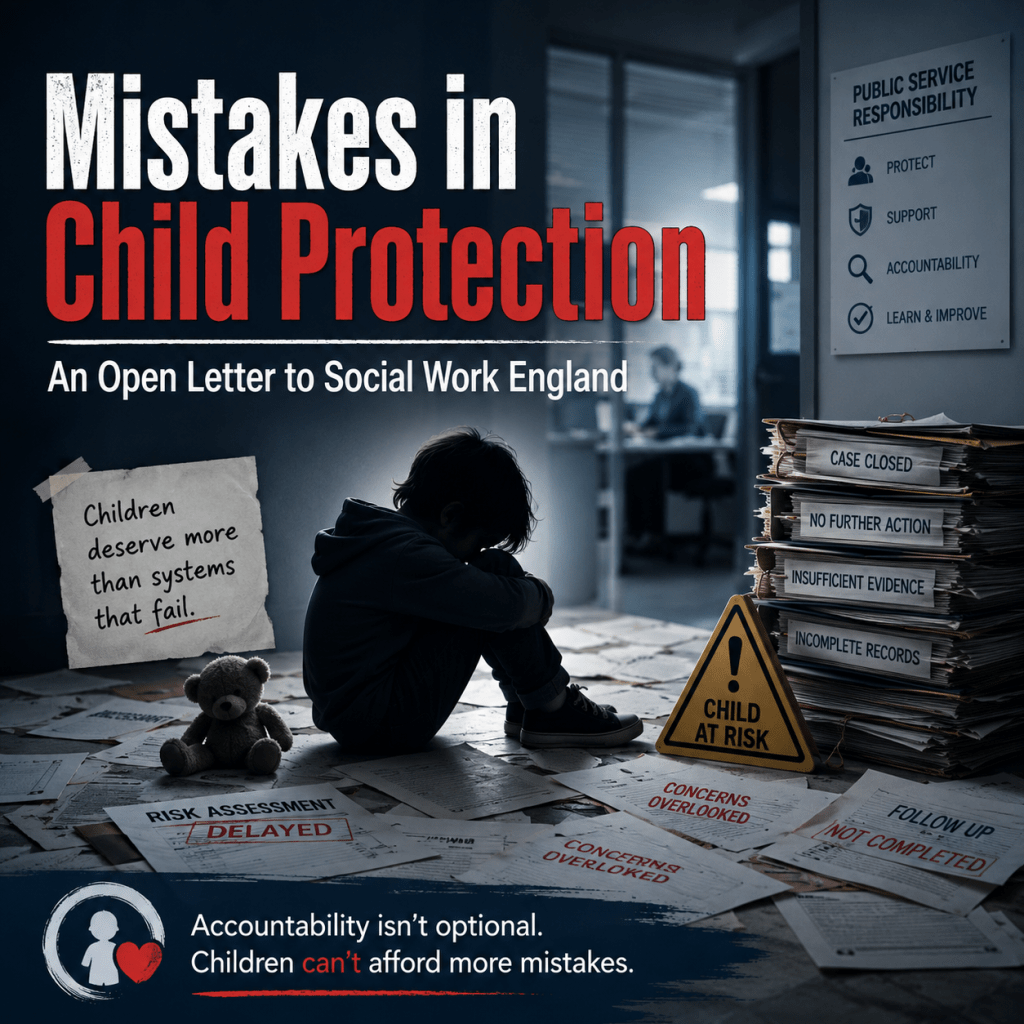
- Mistakes in Child Protection: An Open Letter to Social Work England
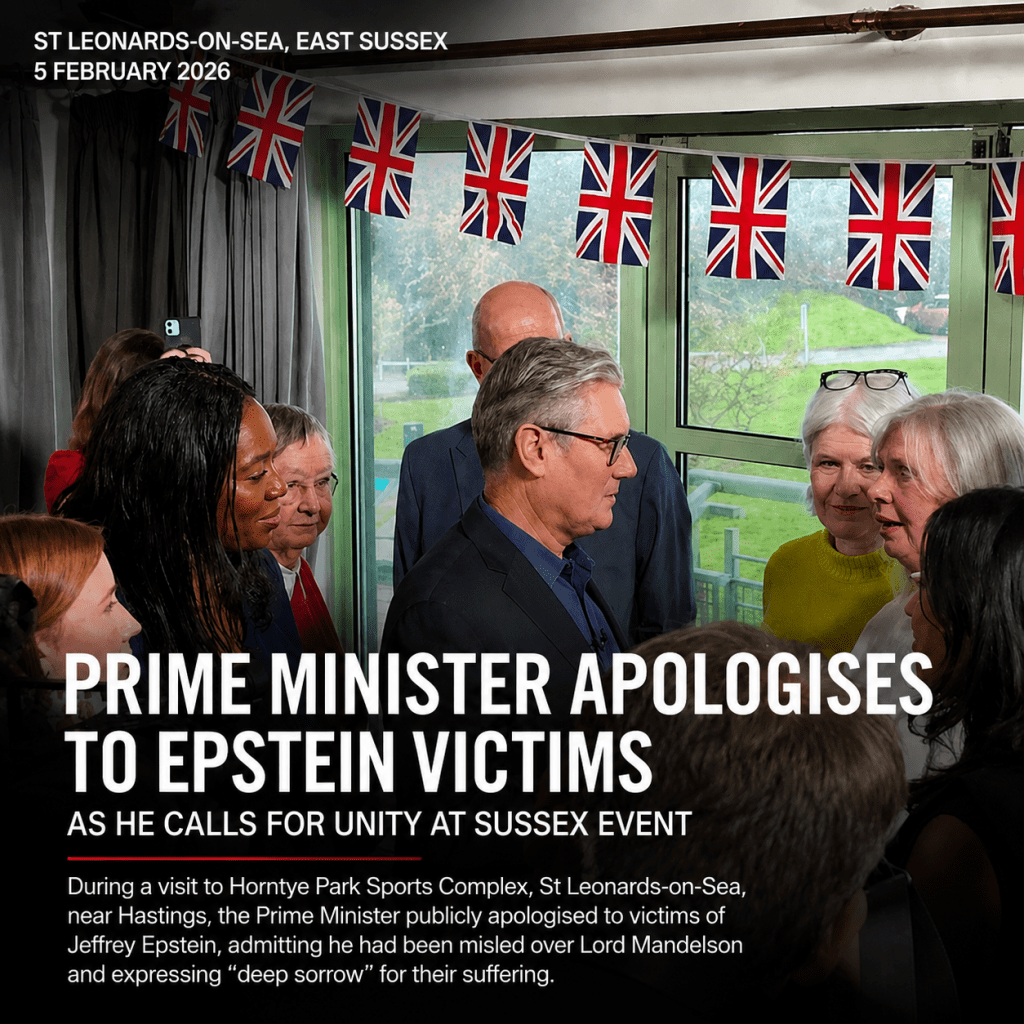
- Prime minister Apologized to Epstein Victims
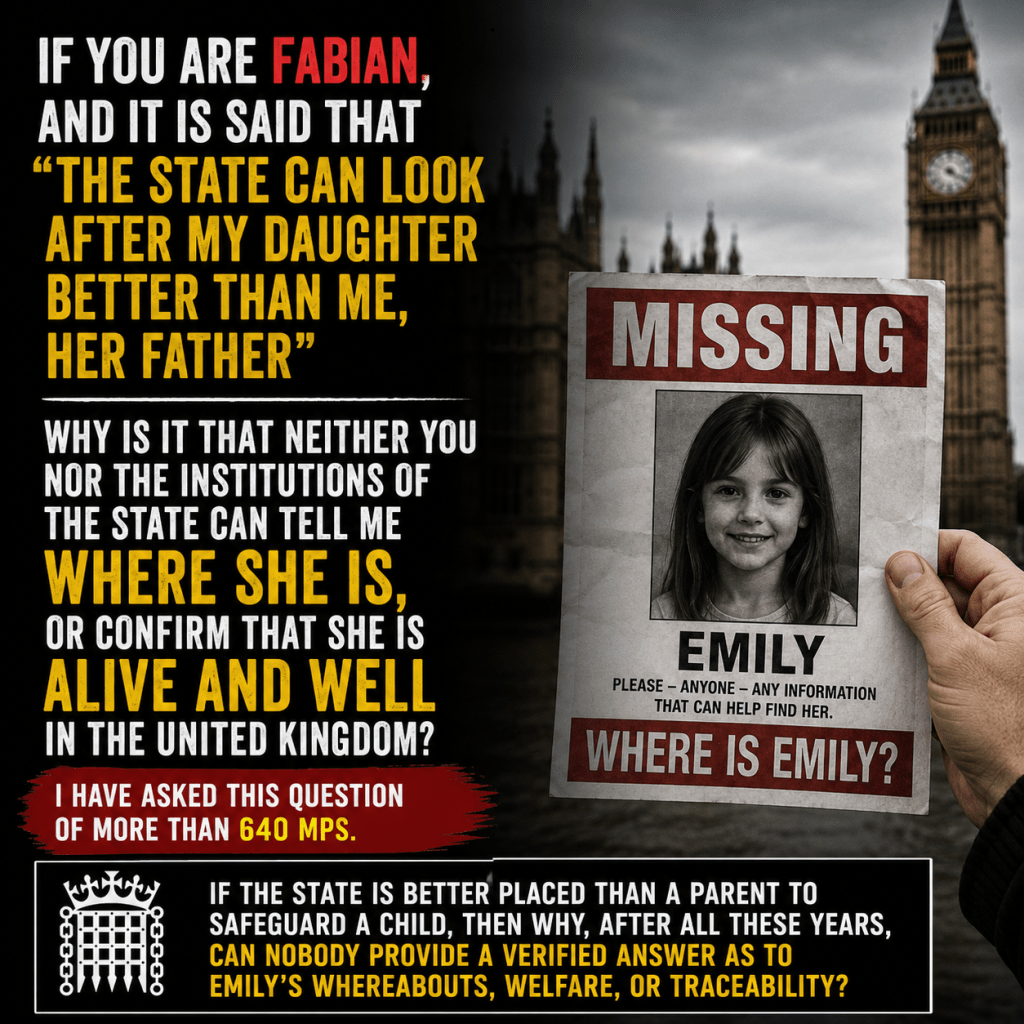
- Fabian Society Members in the Labour Party (2026)
- Well, you view the optics and answer the question is this case of body snatchers?
- Is Sir Kier Starmer inviting affiliated people PIE into his advice chain?



 thestealingofemily.co.uk
Leave a comment