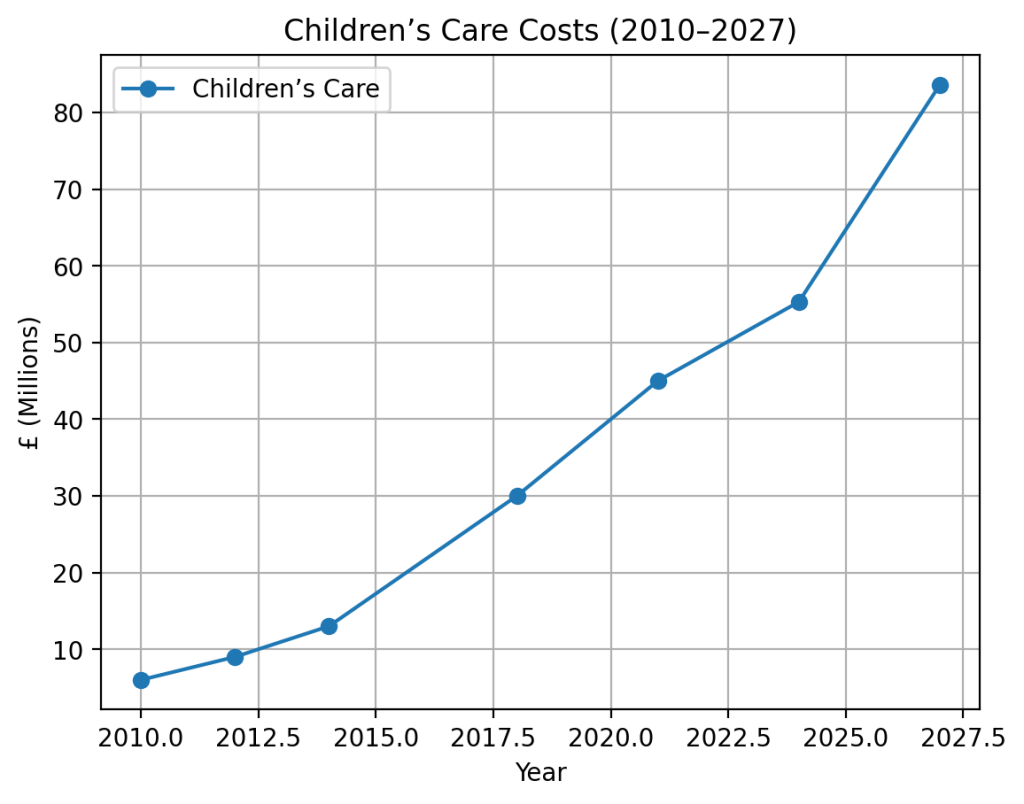
For nearly two decades, I have raised concerns about how public authorities manage children’s services, funding pressures, and accountability. Those concerns were often dismissed when the figures were small enough to ignore. Today, the numbers are public, the deficits are acknowledged, and the borrowing is no longer theoretical.
East Sussex County Council now openly reports multi-year budget shortfalls driven largely by Children’s Services and Adult Social Care. Local leaders acknowledge that borrowing is being used to bridge gaps that savings proposals cannot cover. This is not an abstract policy debate. Borrowing today becomes cuts tomorrow, and those cuts land first on the most vulnerable.
This page sets out the evidence trail: what was warned about years ago, what councils now admit in public documents, and the consequences residents are being asked to carry. It also links to archived reporting and primary sources so readers can check the record for themselves.
You don’t have to agree with my conclusions. You only have to look at the numbers and ask: how did we get here, who is accountable, and who pays when the bill comes due?
Re: RADIO: Kieth Glazier
East Sussex County Council
Re; Eastbourne Borough Council Leader: This is borrowing, and it has to be paid back
Councillor Glazier
Re: Eastbourne Borough Council Leader – This is borrowing, and it has to be paid back
In October 2024, East Sussex County Council publicly acknowledged a projected budget deficit of £55.3 million in 2025/26, rising to £83.6 million by 2027/28.
The council identified Children’s Services and Adult Social Care as major contributors to this financial pressure and confirmed that the savings proposals currently being consulted on would only partially mitigate the deficit.
To balance budgets, the council has indicated that continued borrowing alongside savings measures is being considered.
Given this context, can you explain how further borrowing by Eastbourne Borough Council is financially responsible, and how residents will be protected from the long-term consequences of this debt?
Is this financial pressure and continued borrowing part of the reason why 758,000 children are now living in poverty or with Epstein supply route or dead? , and what responsibility do local authorities take in addressing the social impact of these funding decisions?
What specific measures are in place to ensure transparency, accountability, and a realistic plan for repayment without further impact on essential services?
Warm regards,
Martin Newbold


 thestealingofemily.co.uk
Leave a comment