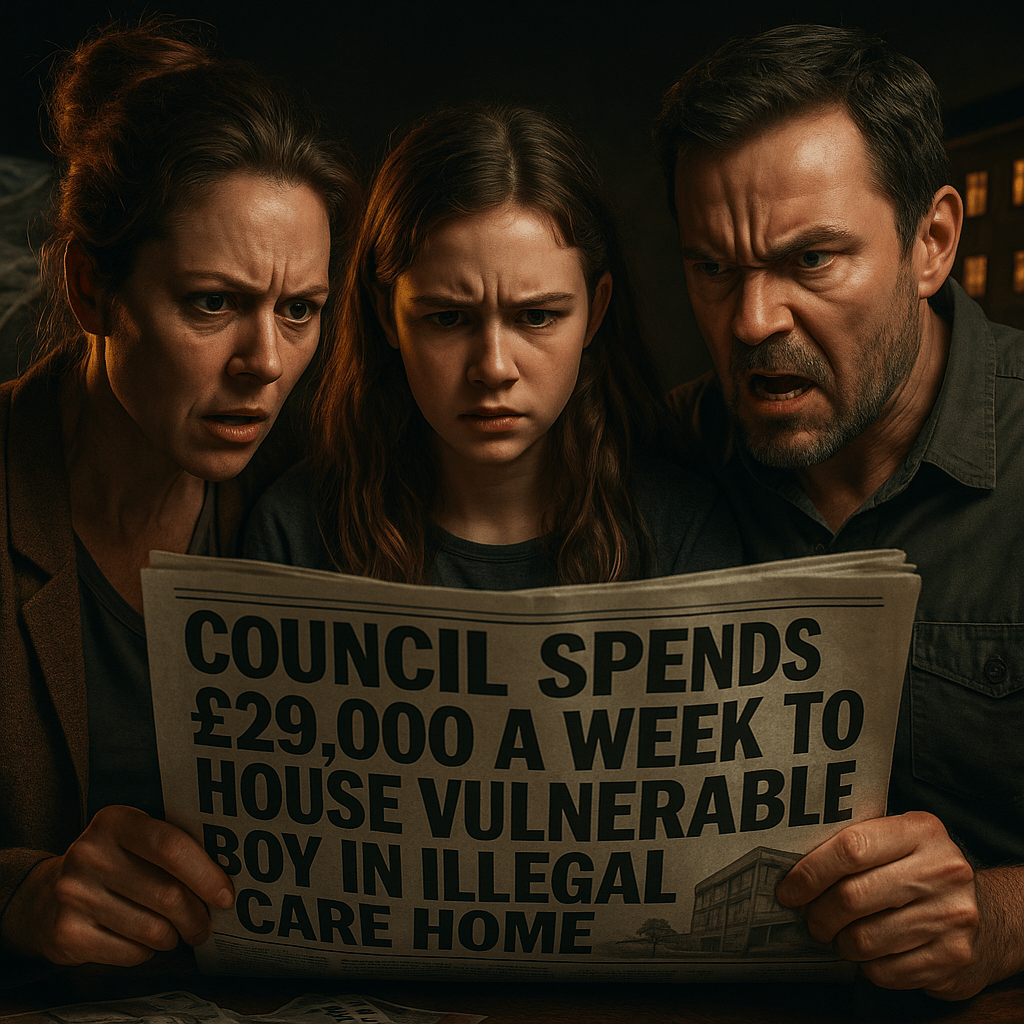
💸 Outrage Over Costs
- The £29,000-per-week price tag triggered near-universal disbelief and anger.
- Many compared it unfavourably to luxury experiences or high-end hotels (e.g. The Ritz, Disneyland).
- Several users demanded a full itemised bill or audit to investigate possible profiteering or mismanagement.
“Over £4,100 per day. No wonder council tax is so high.”
“The council are being ripped off, which means we’re being ripped off.”
The judge presiding over the case was Mr Justice Keehan, a senior High Court judge with extensive experience in Family Division and Court of Protection matters.
🗣️ What did Mr Justice Keehan say?
In his High Court judgment (as reported by Island Echo and other outlets):
- He described the arrangement as: “Wholly inadequate.”
- He criticised the quality of care, citing: “Social isolation and frequent use of restraint” used on the 10-year-old boy.
- He made a pointed comment about the extraordinary cost: “The Isle of Wight Council could have sent the child to Disneyland Paris for a month and saved money.”
This comment was reported to underscore the excessive financial burden relative to the quality of the placement.
What happened
- Isle of Wight Council spent approximately £500,000 over four months—around £29,000 per week—to house a vulnerable 10‑year‑old boy in a children’s home that was not registered with Ofsted, a criminal offence under the Care Standards Act. thetimes.co.uk+7thebureauinvestigates.com+7uk.news.yahoo.com+7reddit.com+15islandecho.co.uk+15thetimes.co.uk+15
- The placement lasted about 17 weeks, costing roughly 1.2% of the council’s annual Children’s Services budget, which supports protection, education for special-needs children, and care accommodation for 200+ children. ifp.nyu.edu+2islandecho.co.uk+2thetimes.co.uk+2
Court findings & child’s circumstances
- A High Court judge described the setting as “wholly inadequate,” citing frequent use of restraint and social isolation. The hearing was held to renew a Deprivation of Liberty Order, allowing care staff to restrain the boy—a rare measure for a child of his age. thetimes.com+10islandecho.co.uk+10thetimes.co.uk+10
- The boy had been admitted to care the previous year after experiencing domestic violence and being assessed as beyond parental control. He had already been moved through a series of unregistered placements. ifp.nyu.edu
Broader context
- This case highlights a national crisis: illegal (unregistered) children’s homes are increasingly being used due to the shortage of secure or registered placements. Ofsted investigations identified 900+ single‑occupant illegal homes across England in 2023, compared to around 150 in 2020. m.facebook.com+12thetimes.co.uk+12thebureauinvestigates.com+12
- The number of extraordinary-cost placements (£10,000+ per week) rose dramatically—from 120 in 2019 to 1,510 in 2023, with 91% of councils now engaging in at least one such placement. thetimes.co.uk
Council and provider response
- The placement was managed by Great Minds Together, a not-for-profit provider, which defended its decision not to register with Ofsted, arguing standard regulations are not flexible enough for children with complex needs. thetimes.co.uk+1ifp.nyu.edu+1
- The council stated it had been seeking a registered placement since the previous year and hoped to move the child to such a setting soon. thetimes.co.uk
🧭 Key Issues and Takeaways
| Issue | What It Means |
|---|---|
| Legal risk | Operating an Ofsted-unregistered children’s home is illegal—though judges may authorize a placement if no alternatives exist. onthewight.com+4thetimes.co.uk+4thetimes.com+4 |
| Systemic shortage | The surge in extreme-cost and illegal placements reflects a critical lack of secure, registered care options. |
| Financial burden | Such placements can consume significant portions of local authorities’ budgets. |
| Children’s welfare concerns | Reports suggest inadequate care, frequent restraint, and isolation, raising ethical and oversight questions. |
| Policy tension | Tension between necessary flexibility for complex cases and regulatory safeguards intended to protect children. |
This situation sheds light on the growing challenges in the UK’s children’s social care system—where limited capacity, high costs, and legal ambiguity intersect, often at the expense of vulnerable children.
🏛️ Criticism of Council and System
- Some accused the Council of incompetence or corruption, suggesting potential “brown envelope” deals or collusion with the provider.
- Others pointed to systemic failure and the privatisation of social care as the root cause.
“There must be a cheaper but adequate care provider – or was it just the easiest option?”
“Capitalism creates a gap, and someone makes a killing. Taxpayers foot the bill.”
🧠 Balanced Views and Structural Analysis
- A few commenters, like “karen” and “Sunshine”, provided well-informed explanations about:
- Legal responsibilities of councils (statutory duty of care).
- The gap between NHS-provided care and actual complex behavioural needs.
- The profit margins in private care (often 25%+).
- Legal technicalities about what constitutes “illegal” care depending on age and registration type.
“The council can’t say no – they’d be sued for dereliction of duty.”
“It’s not illegal if over 8, and the whole system is set up for private capital to swoop in.”
🧒 Concern for the Child
- A minority of commenters redirected attention to the child’s well-being, questioning:
- The justification for restraint use.
- Whether the placement was really “therapeutic”.
- Why he was in care at all if his mother and siblings visit regularly.
“All the comments about cost – what about the poor little boy?”
“The judge is deciding whether to keep using restraints. So much for therapy.”
🧒 The Child’s Circumstances
- Entered care in November 2024 due to domestic violence and behavioural challenges.
- Has already lived in three illegal homes including the GMT house.
🏠 The Care Provider: Great Minds Together (GMT)
- A private, self-described not-for-profit care provider.
- Received £29,000/week from the council.
- Home was unregistered, making it illegal under the Care Standards Act 2000.
- GMT CEO Emma Mander defended the cost, citing travel, activity fees, and claiming the regulatory system was inflexible for complex cases.
- 2023 accounts show £330,000 in dividends paid to directors (including Mander), over 3 years.
💬 Key Quotes
Justice Keehan: “Great Minds [Together] are charging an eye-watering amount of money to provide accommodation and support … that is wholly inadequate.”
Psychologist Rabhya Dewshi: “[Staff] lacked skills in understanding, de-escalating, and regulating [the boy’s] feelings.”
Mother’s barrister Kathryn Blair: “Everyone spat out their tea when they read the amount [GMT] is charging, and offering very little.”
Children’s Commissioner Rachel de Souza:
“Every night across England hundreds of children are going to sleep in illegal settings … isolated, without appropriate support.”
Evidence:
3) Isle of Wight Council v [A] [2025] EWHC (Fam).


 thestealingofemily.co.uk
Leave a comment