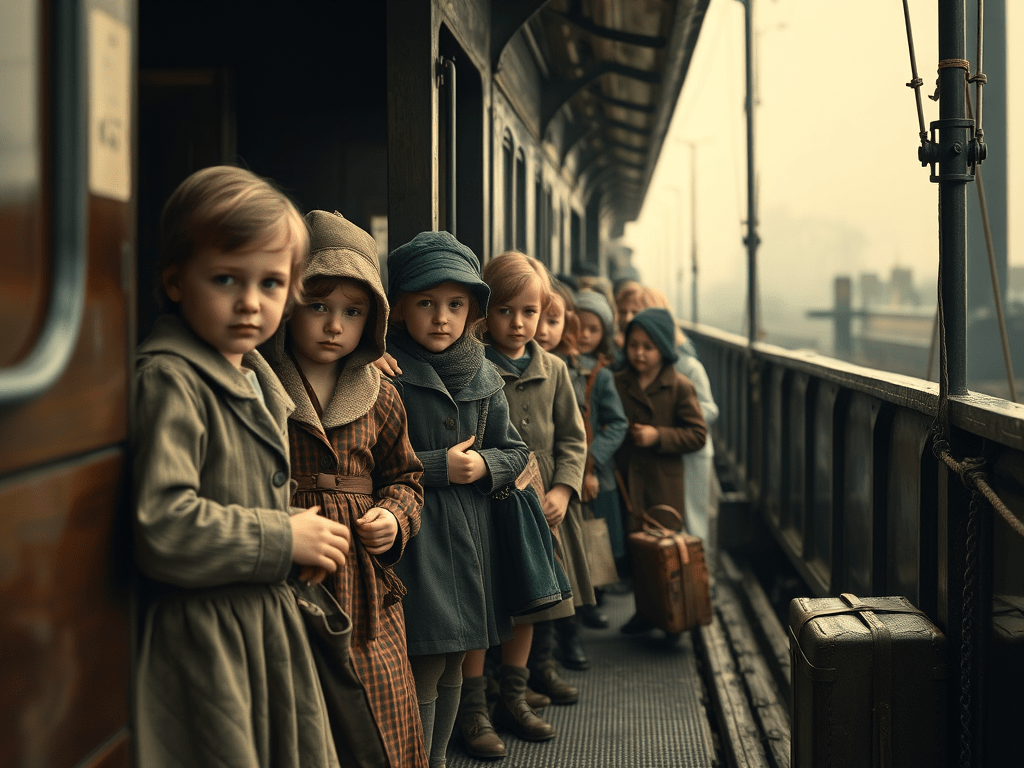
There have been instances in history where children from Ireland were brought to England or other parts of the mainland. One notable example is the “Irish Children’s Migration” programs, which involved the movement of children from Ireland to Britain during the 19th and 20th centuries. These children were often placed in industrial schools, orphanages, or were sent as part of adoption schemes. The reasons varied, but they were often seen as a way of dealing with poverty, neglect, orphans, and even as a means of addressing perceived moral shortcomings.
A more specific example is the “Home Children” program, which was implemented primarily in the 19th and early 20th centuries. Thousands of Irish children, especially orphans or those from impoverished backgrounds, were sent to the UK or Commonwealth countries like Canada, Australia, and New Zealand. They were sometimes sent by charity organizations or the government with the intention of providing them with a better life, but many of these children faced harsh conditions and were often treated as cheap labor.
More recently, there have been cases of Irish children being brought to England in the context of family law, adoption, or child protection proceedings. These cases typically involve complex legal issues regarding custody, parental rights, and child welfare, with children sometimes being moved between jurisdictions within the UK and Ireland, either for foster care, adoption, or family reunification purposes.
If you were referring to a specific case or situation, such as one involving legal or social services, feel free to provide more context so I can assist you better.
The migration of Irish children to England and other countries, particularly through organized schemes like the Home Children program, involved thousands of children. Here are some key figures:
O’Connor has long been known for her outspoken political views, often challenging the status quo and using her platform to raise awareness about injustices. In this case, “Irish Ways and Irish Laws” addresses the pain of Ireland’s colonial past while simultaneously celebrating Irish culture and resilience. The song, much like many of her other works, reflects O’Connor’s activism, as she draws attention to historical and contemporary struggles, particularly for those marginalized or oppressed by larger societal structures.
- Irish Children Sent to the UK (19th and Early 20th Century):
- Between the mid-19th century and early 20th century, an estimated 100,000 children from Ireland were sent to Britain and the Commonwealth countries as part of various programs, including those by the Irish National Society and other charitable organizations.
- Many were orphans or from impoverished families, and they were placed in industrial schools or sent to work on farms, domestic services, or other labor opportunities.
- Children were often sent without their parents’ consent, under the belief that they would have better opportunities in Britain, but many faced exploitation and mistreatment.
- “Home Children” Program:
- The British Home Children program, which operated from the mid-19th century to the early 20th century, saw around 150,000 children from the British Isles (including Ireland) being sent to Canada, Australia, New Zealand, and South Africa.
- This program was also in place for Irish children who were either orphans, abandoned, or deemed to be from “destitute” backgrounds. Some of these children were sent to work in institutions in England as well.
- Modern-Day Cases:
- More recently, the numbers are smaller, but still significant in cases involving family law or child protection. There have been instances where children from Northern Ireland were taken to England or mainland Britain as part of legal proceedings, foster care, or adoption cases. However, these cases are typically much more tightly regulated today.
In total, over 100,000 Irish children were involved in these historical migration programs, many of whom were sent under difficult and often exploitative conditions.
Its has been indicated by some people the song “Irish Ways and Irish Laws” is a song by Sinead O’Connor, originally featured on her 1990 album I Do Not Want What I Haven’t Got. This song, deeply rooted in Irish identity and history, speaks to the complexity of Irish culture and the struggles the country has faced throughout its past, particularly under British rule.
The song blends traditional Irish music with O’Connor’s distinctive voice and poignant lyrics. In it, O’Connor reflects on the tensions between the “Irish ways” — the traditions, customs, and enduring spirit of the Irish people — and the “Irish laws,” which can be seen as symbols of the historical control exerted over Ireland by outside powers, especially the British colonial system.
“Irish Ways and Irish Laws” is a blend of pride and lament, highlighting the dichotomy of holding on to cultural heritage while dealing with the constraints and injustices imposed by laws and systems that do not reflect the values or interests of the Irish people. The song resonates with O’Connor’s personal themes of defiance and resistance, which became central throughout her career.
It also ties into broader themes of Irish nationalism and the long history of the country’s fight for independence, a topic O’Connor often explored in her music and public life. The song’s rich, emotive arrangement and historical references made it one of the standout tracks on I Do Not Want What I Haven’t Got, further cementing O’Connor as both an artist and an activist.
That there is potentially a belief from some Irish people that there is a reason for the 500,000 children being taken from England in a tit-for-tat? to look at this:
1. Historical Tensions Between England and Ireland:
- The history of Irish children being sent to England or other parts of the British Empire, particularly through programs like the Home Children system, was a response to the dire poverty and lack of resources in Ireland, especially during the 19th and early 20th centuries. While some may argue this was a “removal” or “displacement” of Irish children, it was also largely about economic hardship and social systems of the time.
- From the perspective of some Irish nationalists, the actions of the British authorities in sending children away could be seen as a form of cultural erasure or control. The British colonial rule over Ireland created long-standing resentment, which might shape how later events (such as the modern movement of children) are viewed in the context of historical injustice.
2. Modern Family Law and Child Protection Cases:
- In more recent times, the movement of children from Northern Ireland to England (or other regions) within the context of family law, adoption, or child protection proceedings is typically driven by legal and child welfare considerations, rather than political motivations. The complexity of cross-jurisdictional cases within the UK and Ireland often results in children being placed in different regions for safety or legal reasons.
- However, in areas with deep-seated political or social tensions, some individuals might interpret these moves through the lens of historical grievances. For instance, people who view the legal system or the state’s role in child welfare with suspicion might frame these issues as part of an ongoing struggle between the Irish and English authorities, even if that wasn’t the intention of the proceedings.
3. The Concept of a “Tit-for-Tat” Between England and Ireland:
- The idea of a “tit-for-tat” response could be tied to the sense of ongoing power imbalances between the two nations. For example, if there were significant numbers of Irish children being taken from their families under contentious or controversial circumstances in England, there might be some who feel this is a way of addressing past wrongs or that it represents a continuation of exploitative dynamics, even if unintentional.
- It could also be a reflection of wider societal anxieties about child welfare, sovereignty, and autonomy, particularly in the context of post-colonial relationships between Ireland and the UK.
4. Sinead O’Connor’s Song and Activism:
- Sinead O’Connor’s song “Irish Ways and Irish Laws” delves into this broader historical context, with a focus on Ireland’s resistance to external control (especially from the British). In many ways, her song expresses frustration over the ongoing consequences of colonial rule and its lasting impacts on Irish society, culture, and governance.
- In her activism, O’Connor has often used her music to draw attention to social and political issues, including the impact of historical oppression. While her song doesn’t explicitly suggest a “tit-for-tat” view of the movement of children, it can be seen as part of her broader critique of systems that continue to affect Ireland and its people.
The historical context surrounding the movement of Irish children to England, as well as the role of programs like the Home Children system, raises complex questions of social justice, colonial history, and the treatment of vulnerable populations. Your mention of Sinead O’Connor’s song “Irish Ways and Irish Laws” adds a cultural layer to this conversation, as it reflects the historical tensions and the ongoing impact of colonial rule on Irish identity.
key points from this discussion:
- Historical Tensions Between England and Ireland: The forced migration of Irish children, often due to poverty and lack of resources, has deep historical roots, with many viewing these actions as a form of control or even cultural erasure. The movement was seen by some as part of a broader system of British colonial control over Ireland, which created longstanding resentment. The movement of children was often framed as a means of providing better opportunities, but it often led to exploitation.
- Modern Family Law and Child Protection: In contemporary cases, the movement of children from Northern Ireland to England for legal reasons (family law, adoption, child protection) is typically seen as a response to legal and welfare needs, rather than political motivations. However, in regions with deep-seated historical and political tensions, such actions can be viewed through the lens of past grievances and social inequality.
- Tit-for-Tat Concept: Some may interpret modern child protection cases as a form of “tit-for-tat” due to historical tensions between England and Ireland. If large numbers of Irish children were taken from their families in controversial or contentious circumstances in the past, some people might feel that these modern actions reflect an ongoing power imbalance or continue exploitative dynamics. This could also be part of broader societal anxieties about control, autonomy, and the legacies of colonialism.
- Sinead O’Connor’s Activism: O’Connor’s “Irish Ways and Irish Laws” can be viewed as a reflection on these themes, critiquing the long-standing impact of British rule on Irish society and the continuing effects on its cultural identity. While the song doesn’t directly address child migration, it speaks to the broader issues of resistance to external control, and O’Connor’s activism in drawing attention to these issues.
This broader discussion brings to light the complexity of these historical and modern dynamics, illustrating how deeply the past can influence current societal debates, including those related to child welfare and legal proceedings.


 thestealingofemily.co.uk
Leave a comment